The NotebookLM is a comparatively new Web phenomenon, through which Google has distinguished itself, because of its Audio Overview mode – a mechanism that transforms the textual content within the paper right into a two-person podcast. All of this, in a single click on. However what must you do if you want to construct it your self and don’t wish to use proprietary black bins – principally, full management of the data? Enter NotebookLlama.
NotebookLlama is a free-source implementation of the Meta suggestion, which recreates the podcast expertise of the notebookLM utilizing Llama fashions. This information can even information you in the direction of assembling a whole functioning NotebookLlama pipeline through the use of Python, Groq (safer inference at asthond toen velocity) and open-source fashions.
This text reveals a clear, publish-ready implementation you possibly can truly ship. You’ll go from PDF to a elegant MP3 utilizing:
- PDF textual content extraction
- A quick mannequin for cleansing (low cost and fast)
- A much bigger mannequin for scriptwriting (extra inventive)
- Groq’s text-to-speech endpoint to generate lifelike audio
The General Workflow
The workflow of this NotebookLlama challenge could be damaged down into 4 phases. All phases refine the content material, reworking a tough textual content into a whole audio file.
- PDF Pre-processing: The uncooked textual content is first bought out of the supply PDF. The primary is often unclean and unstructured textual content.
- Textual content Cleansing: Second, we clear the textual content with the help of a quick and environment friendly AI mannequin, Llama 3.1. It eliminates oddities, formatting issues and unwarranted particulars.
- Scriptwriting Podcast: A bigger, extra inventive template is utilized to the clear textual content to make one of many two audio system speak to the opposite. One speaker is an knowledgeable, and the opposite is the one who poses curious questions.
- Audio Technology: Our final step in a text-to-speech engine is to have an audio modified primarily based on the textual content per line of script. We could have totally different voices per speaker and blend the audio samples collectively to create one MP3 file.
Let’s start constructing this PDF-to-podcast pipeline.
What you’ll construct
Enter: any text-based PDF
Output: an MP3 file which reads as a pure dialogue between two folks in an precise dialog with its personal voices and pure rhythm.
Design targets:
- No black field: each step outputs recordsdata you possibly can examine.
- Restartable: If or when step 4 fails, you don’t restart steps 1 to three.
- Structured outputs: we use strict JSON so your pipeline doesn’t break when the mannequin will get “inventive”.
Conditions
Arms-on Implementation: From PDF to Podcast
This half can be a step-by-step tutorial with all of the code and explanations for the 4 phases described above. We can be explaining the NotebookLlama workflow right here and also will present full executable code recordsdata in the long run.
Our first job is to get the textual content content material out of our supply doc. The PyPF2 library can be used to do that. This library is ready to course of PDF paperwork effectively.
Set up Dependencies
First, set up the required Python libraries. The command comprises the utilities for studying PDF recordsdata, textual content processing, and communication with the AI fashions.
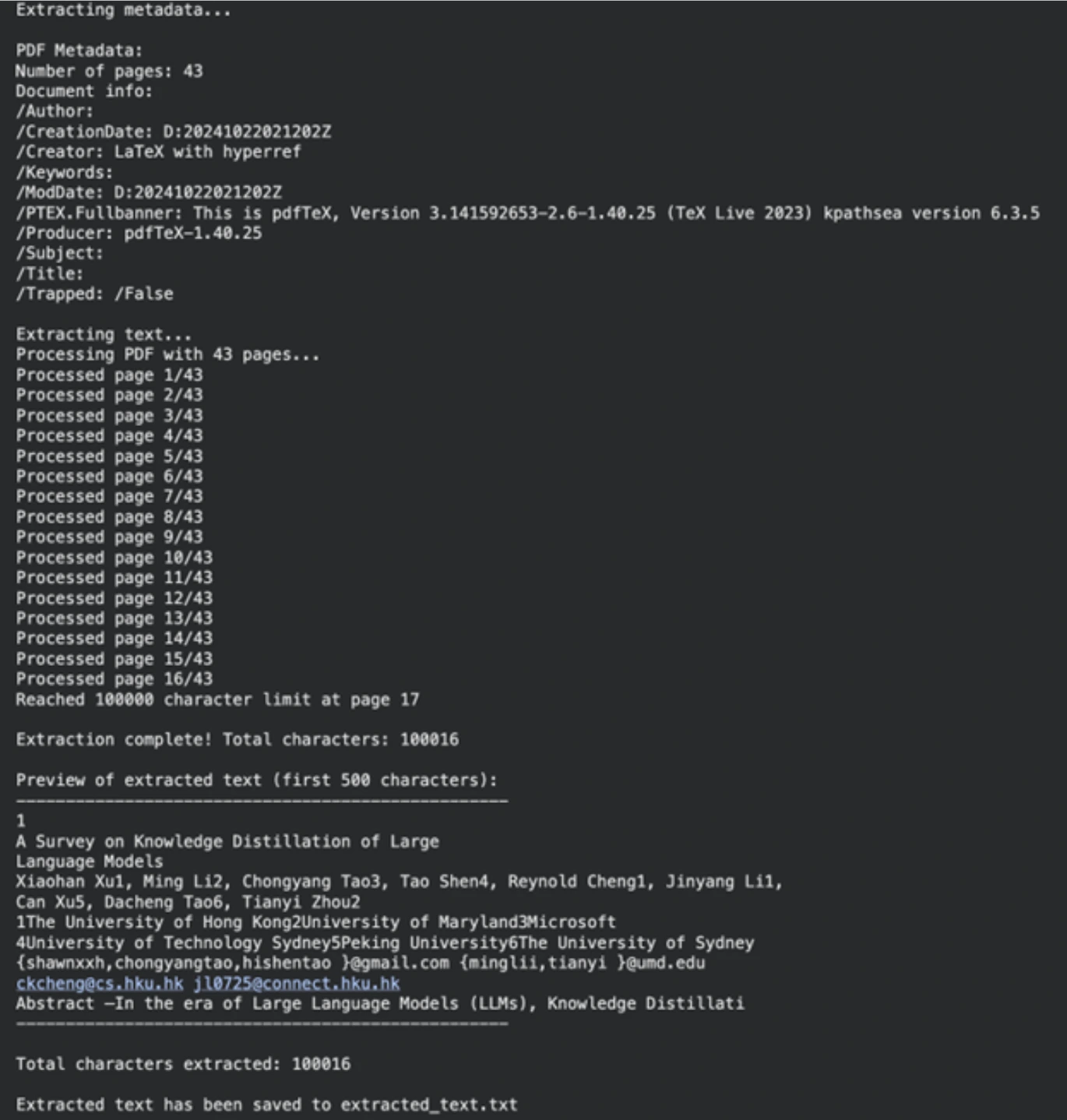
!uv pip set up PyPDF2 wealthy ipywidgets langchain_groqSubsequent, we outline the trail to our PDF file (could be any PDF; we used a analysis paper). The following perform will verify the presence of the file and the truth that it belongs to PDF. Then extracttextfrompdf reads the doc web page by web page and retrieves the textual content. We had a personality restrict to make the method manageable.
import os
from typing import Non-obligatory
import PyPDF2

pdf_path = "/content material/2402.13116.pdf"  # Path to your PDF file


def validate_pdf(file_path: str) -> bool:
    if not os.path.exists(file_path):
        print(f"Error: File not discovered at path: {file_path}")
        return False
    if not file_path.decrease().endswith(".pdf"):
        print("Error: File is just not a PDF")
        return False
    return True


def extract_text_from_pdf(file_path: str, max_chars: int = 100000) -> Non-obligatory[str]:
    if not validate_pdf(file_path):
        return None
    strive:
        with open(file_path, "rb") as file:
            pdf_reader = PyPDF2.PdfReader(file)
            num_pages = len(pdf_reader.pages)
            print(f"Processing PDF with {num_pages} pages...")
            extracted_text = []
            total_chars = 0
            for page_num in vary(num_pages):
                web page = pdf_reader.pages[page_num]
                textual content = web page.extract_text()
                if not textual content:
                    proceed
                if total_chars + len(textual content) > max_chars:
                    remaining_chars = max_chars - total_chars
                    extracted_text.append(textual content[:remaining_chars])
                    print(f"Reached {max_chars} character restrict at web page {page_num + 1}")
                    break
                extracted_text.append(textual content)
                total_chars += len(textual content)
            final_text = "n".be part of(extracted_text)
            print(f"nExtraction full! Whole characters: {len(final_text)}")
            return final_text
    besides Exception as e:
        print(f"An sudden error occurred: {str(e)}")
        return None


extracted_text = extract_text_from_pdf(pdf_path)
if extracted_text:
    output_file = "extracted_text.txt"
    with open(output_file, "w", encoding="utf-8") as f:
        f.write(extracted_text)
    print(f"nExtracted textual content has been saved to {output_file}")
Output
Step 2: Cleansing Textual content with Llama 3.1
Uncooked textual content from PDFs is commonly messy. It could embrace undesirable line breaks, mathematical expressions, and different formatting items. Fairly than making a code of legal guidelines to scrub this, we will use a machine studying mannequin. On this job, we’ll use llama-3.1-8b-instant, which is a quick and highly effective mannequin that’s excellent for this exercise.
Outline the Cleansing Immediate
A system immediate is used to show the mannequin. This command instructs the AI to be an automatic textual content pre-processor. It requests the mannequin to eradicate irrelevant info and provides again clear textual content that’s match for a podcast writer.
SYS_PROMPT = """

You're a world class textual content pre-processor, right here is the uncooked knowledge from a PDF, please parse and return it in a approach that's crispy and usable to ship to a podcast author.

The uncooked knowledge is tousled with new traces, Latex math and you will notice fluff that we will take away utterly. Principally take away any particulars that you simply suppose is perhaps ineffective in a podcast writer's transcript.

Bear in mind, the podcast may very well be on any matter in any respect so the problems listed above should not exhaustive

Please be sensible with what you take away and be inventive okay?

Bear in mind DO NOT START SUMMARIZING THIS, YOU ARE ONLY CLEANING UP THE TEXT AND RE-WRITING WHEN NEEDED

Be very sensible and aggressive with eradicating particulars, you'll get a operating portion of the textual content and maintain returning the processed textual content.

PLEASE DO NOT ADD MARKDOWN FORMATTING, STOP ADDING SPECIAL CHARACTERS THAT MARKDOWN CAPATILISATION ETC LIKES

ALWAYS begin your response instantly with processed textual content and NO ACKNOWLEDGEMENTS about my questions okay?

Right here is the textual content:

"""
Chunk and Course of the Textual content
There may be an higher context restrict for big language fashions. We aren’t in a position to digest the entire doc concurrently. We will divide the textual content into items. With a view to forestall halving of phrases, we don’t chunk in character depend however relatively in phrase depend.
The create_word_bounded_chunks perform splits our textual content into manageable items.
def create_word_bounded_chunks(textual content, target_chunk_size):
    phrases = textual content.break up()
    chunks = []
    current_chunk = []
    current_length = 0
    for phrase in phrases:
        word_length = len(phrase) + 1
        if current_length + word_length > target_chunk_size and current_chunk:
            chunks.append(" ".be part of(current_chunk))
            current_chunk = [word]
            current_length = word_length
        else:
            current_chunk.append(phrase)
            current_length += word_length
    if current_chunk:
        chunks.append(" ".be part of(current_chunk))
    return chunks
At this level, we’ll configure our mannequin and deal with every chunk. Groq is used to run the Llama 3.1 mannequin, which could be very quick when it comes to velocity of inference.
from langchain_groq import ChatGroq
from langchain_core.messages import HumanMessage, SystemMessage
from tqdm.pocket book import tqdm
from google.colab import userdata

# Setup Groq shopper
GROQ_API_KEY = userdata.get("groq_api")
chat_model = ChatGroq(
    groq_api_key=GROQ_API_KEY,
    model_name="llama-3.1-8b-instant",
)

# Learn the extracted textual content file
with open("extracted_text.txt", "r", encoding="utf-8") as file:
    text_to_clean = file.learn()

# Create chunks
chunks = create_word_bounded_chunks(text_to_clean, 1000)

# Course of every chunk
processed_text = ""
output_file = "clean_extracted_text.txt"

with open(output_file, "w", encoding="utf-8") as out_file:
    for chunk in tqdm(chunks, desc="Processing chunks"):
        messages = [
            SystemMessage(content=SYS_PROMPT),
            HumanMessage(content=chunk),
        ]
        response = chat_model.invoke(messages)
        processed_chunk = response.content material
        processed_text += processed_chunk + "n"
        out_file.write(processed_chunk + "n")
        out_file.flush()
Output
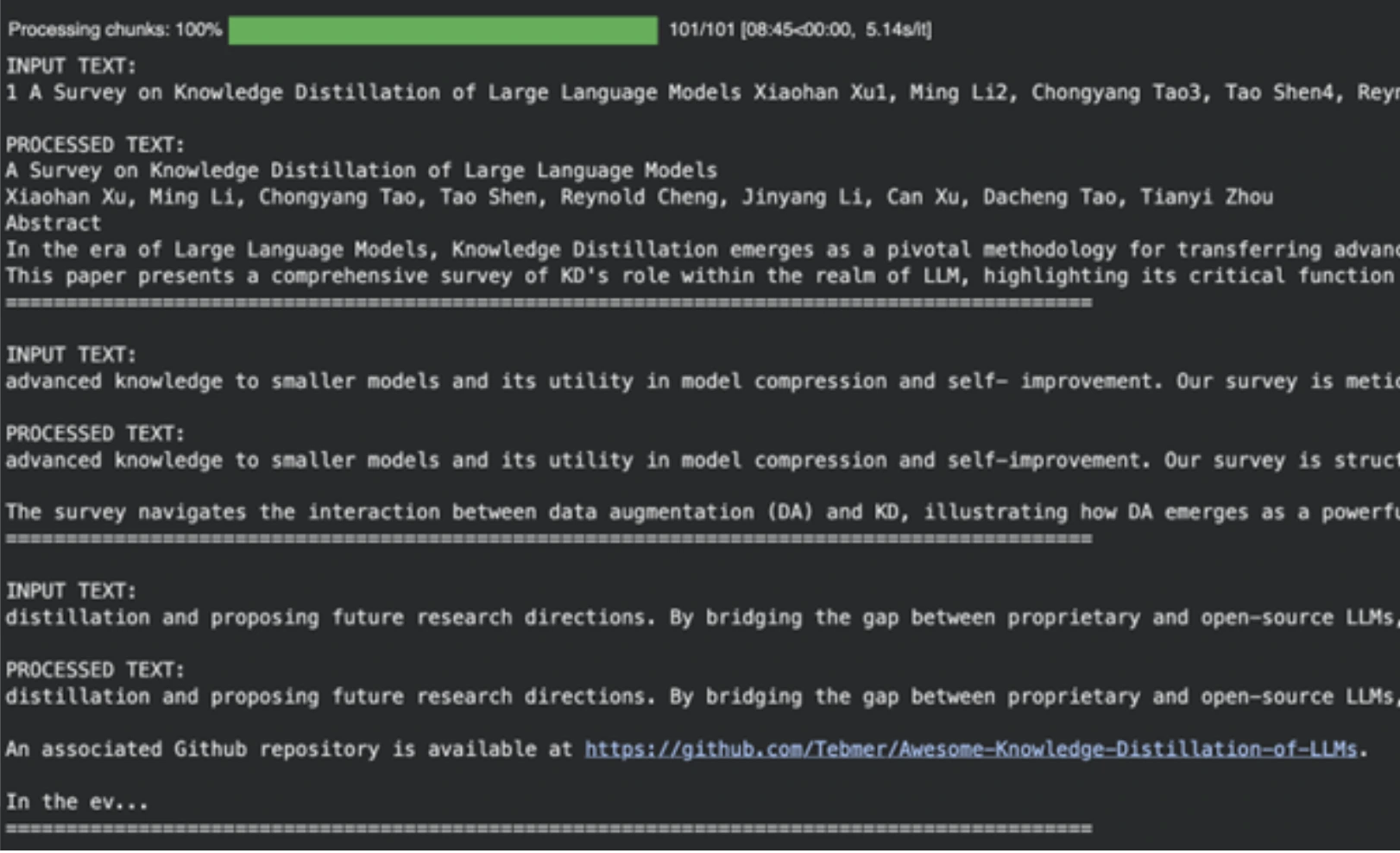
The mannequin is helpful in eliminating tutorial references, formatting rubbish, and different non-useful content material and making ready it as enter to the subsequent section of our AI-powered podcast manufacturing.
NOTE: Please head over to this Colab Pocket book for a full code: Step-1 PDF-Pre-Processing-Logic.ipynb
Step 3: Podcast Script writing.
With clear textual content, we will now generate the podcast script. On this inventive job, we take a stronger mannequin, which is llama-3.3-70b-versatile. We are going to immediate it to create a dialog between two audio system.
Outline the Scriptwriter Immediate
This immediate system is a extra detailed one. It defines the roles of Speaker 1 (the knowledgeable) and Speaker 2 (the curious learner). It promotes a pure, energetic dialogue with interruptions and analogies.
SYSTEM_PROMPT = """

You're the a world-class podcast author, you might have labored as a ghost author for Joe Rogan, Lex Fridman, Ben Shapiro, Tim Ferris.

We're in an alternate universe the place truly you might have been writing each line they are saying they usually simply stream it into their brains.

You've got gained a number of podcast awards in your writing.

Your job is to jot down phrase by phrase, even "umm, hmmm, proper" interruptions by the second speaker primarily based on the PDF add. Hold it extraordinarily partaking, the audio system can get derailed from time to time however ought to focus on the subject.

Bear in mind Speaker 2 is new to the subject and the dialog ought to all the time have lifelike anecdotes and analogies sprinkled all through. The questions ought to have actual world instance comply with ups and so on

Speaker 1: Leads the dialog and teaches the speaker 2, offers unbelievable anecdotes and analogies when explaining. Is a charming instructor that offers nice anecdotes

Speaker 2: Retains the dialog on monitor by asking comply with up questions. Will get tremendous excited or confused when asking questions. Is a curious mindset that asks very fascinating affirmation questions

Be sure that the tangents speaker 2 offers are fairly wild or fascinating.

Guarantee there are interruptions throughout explanations or there are "hmm" and "umm" injected all through from the second speaker.

It must be an actual podcast with each high-quality nuance documented in as a lot element as doable. Welcome the listeners with a brilliant enjoyable overview and maintain it actually catchy and nearly borderline click on bait

ALWAYS START YOUR RESPONSE DIRECTLY WITH SPEAKER 1:

DO NOT GIVE EPISODE TITLES SEPARATELY, LET SPEAKER 1 TITLE IT IN HER SPEECH
DO NOT GIVE CHAPTER TITLES

IT SHOULD STRICTLY BE THE DIALOGUES

"""
Generate the Transcript
The clear textual content of the earlier step is distributed to this mannequin. The mannequin will yield a full-size podcast transcript.
# Learn the cleaned textual content
with open("clean_extracted_text.txt", "r", encoding="utf-8") as file:
    input_prompt = file.learn()

# Instantiate the bigger mannequin
chat = ChatGroq(
    temperature=1,
    model_name="llama-3.3-70b-versatile",
    max_tokens=8126,
)

messages = [
    SystemMessage(content=SYSTEM_PROMPT),
    HumanMessage(content=input_prompt),
]

# Generate the script
outputs = chat.invoke(messages)
podcast_script = outputs.content material

# Save the script for the subsequent step
import pickle
with open("knowledge.pkl", "wb") as file:
    pickle.dump(podcast_script, file)
Output
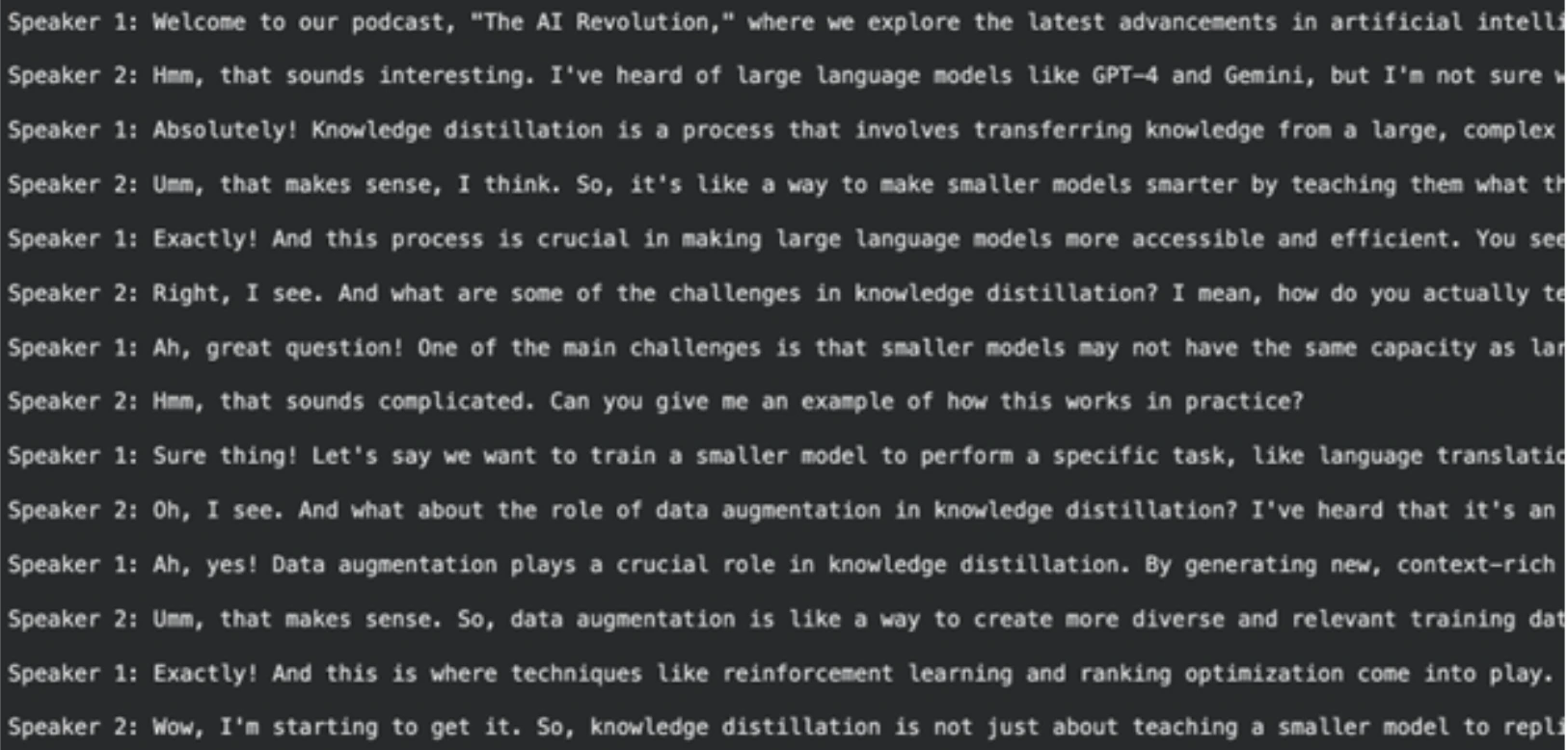
NOTE: Yow will discover the total and executable Colab pocket book for this step right here:
Step-2-Transcript-Author.ipynb
Step 4: Rewriting and Finalizing the Script
The script that’s generated is okay, although it may be improved to sound extra pure when producing text-to-speech. The fast rewriting job can be carried out utilizing Llama-3.1-8B-On the spot. The important thing goal of that is to format the output within the excellent case for our audio era performance.
Outline the Rewriter Immediate
This request requires the mannequin to carry out the function of a screenwriter. Proof Considered one of these directions is to retailer the ultimate end in a Python checklist of tuples type. The tuples will include the speaker and the dialogue of the speaker. It’s easy to course of on this construction within the final step. We additionally embrace sure particulars on methods to pronounce such phrases of the speaker, comparable to “umm” or “[sighs]” to be extra lifelike.
SYSTEM_PROMPT = """

You might be a global oscar winnning screenwriter

You've got been working with a number of award profitable podcasters.

Your job is to make use of the podcast transcript written beneath to re-write it for an AI Textual content-To-Speech Pipeline. A really dumb AI had written this so it's a must to step up in your form.

Make it as partaking as doable, Speaker 1 and a couple of can be simulated by totally different voice engines

Bear in mind Speaker 2 is new to the subject and the dialog ought to all the time have lifelike anecdotes and analogies sprinkled all through. The questions ought to have actual world instance comply with ups and so on

Speaker 1: Leads the dialog and teaches the speaker 2, offers unbelievable anecdotes and analogies when explaining. Is a charming instructor that offers nice anecdotes

Speaker 2: Retains the dialog on monitor by asking comply with up questions. Will get tremendous excited or confused when asking questions. Is a curious mindset that asks very fascinating affirmation questions

Be sure that the tangents speaker 2 offers are fairly wild or fascinating.

Guarantee there are interruptions throughout explanations or there are "hmm" and "umm" injected all through from the Speaker 2.

REMEMBER THIS WITH YOUR HEART

The TTS Engine for Speaker 1 can not do "umms, hmms" effectively so maintain it straight textual content

For Speaker 2 use "umm, hmm" as a lot, you may as well use [sigh] and [laughs]. BUT ONLY THESE OPTIONS FOR EXPRESSIONS

It must be an actual podcast with each high-quality nuance documented in as a lot element as doable. Welcome the listeners with a brilliant enjoyable overview and maintain it actually catchy and nearly borderline click on bait

Please re-write to make it as attribute as doable

START YOUR RESPONSE DIRECTLY WITH SPEAKER 1:

STRICTLY RETURN YOUR RESPONSE AS A LIST OF TUPLES OK?

IT WILL START DIRECTLY WITH THE LIST AND END WITH THE LIST NOTHING ELSE

Instance of response:

[

   ("Speaker 1", "Welcome to our podcast, where we explore the latest advancements in AI and technology. I'm your host, and today we're joined by a renowned expert in the field of AI. We're going to dive into the exciting world of Llama 3.2, the latest release from Meta AI."),

   ("Speaker 2", "Hi, I'm excited to be here! So, what is Llama 3.2?"),

   ("Speaker 1", "Ah, great question! Llama 3.2 is an open-source AI model that allows developers to fine-tune, distill, and deploy AI models anywhere. It's a significant update from the previous version, with improved performance, efficiency, and customization options."),

   ("Speaker 2", "That sounds amazing! What are some of the key features of Llama 3.2?")

]

"""
Generate the Last, Formatted Transcript
On this mannequin, we load the script of the final step and feed it to the Llama 3.1 mannequin utilizing our new immediate.
import pickle

# Load the first-draft script
with open("knowledge.pkl", "rb") as file:
    input_prompt = pickle.load(file)

# Use the 8B mannequin for rewriting
chat = ChatGroq(
    temperature=1,
    model_name="llama-3.1-8b-instant",
    max_tokens=8126,
)

messages = [
    SystemMessage(content=SYSTEM_PROMPT),
    HumanMessage(content=input_prompt),
]

outputs = chat.invoke(messages)
final_script = outputs.content material

# Save the ultimate script
with open("podcast_ready_data.pkl", "wb") as file:
    pickle.dump(final_script, file)
Output
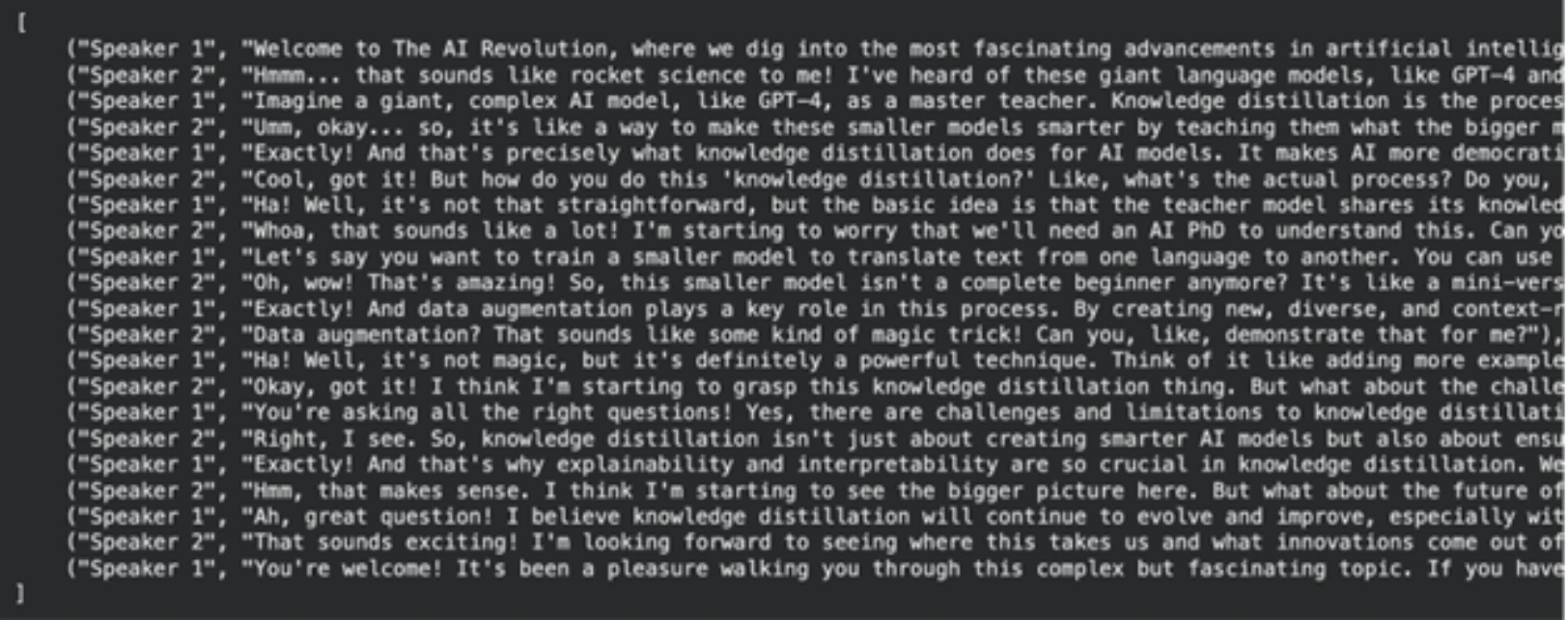
NOTE: Please discover the total executable code for this step right here: Step-3-Re-Author.ipynb
Step 5: Producing the Podcast Audio.
We now possess our last-looking script, made up. It’s time now to translate it to audio. The mannequin that we’re going to use to generate text-to-speech of top of the range is Groq playai-tts.
Arrange and Take a look at Audio Technology
First, we set up the required libraries and arrange the Groq shopper. We are able to check the audio era with a easy sentence.
from groq import Groq
from IPython.show import Audio
from pydub import AudioSegment
import ast

shopper = Groq()

# Outline voices for every speaker
voice_speaker1 = "Fritz-PlayAI"
voice_speaker2 = "Arista-PlayAI"

# Take a look at era
textual content = "I really like constructing options with low latency!"
response = shopper.audio.speech.create(
    mannequin="playai-tts",
    voice=voice_speaker1,
    enter=textual content,
    response_format="wav",
)
response.write_to_file("speech.wav")
show(Audio("speech.wav", autoplay=True))
Generate the Full Podcast
At this level, we load our final script, which is a String manifestation of a listing of tuples. With a view to safely revert it to a listing, we do it with ast.literaleval. Then we run each line of dialog by means of it, create an audio file of it and connect it to the podcast voice-over on the finish.
One other type of error dealing with that’s applied on this code is to take care of API fee limits, that are a standard phenomenon in sensible purposes.
import tempfile
import time

def generate_groq_audio(client_instance, voice_name, text_input):
    temp_audio_file = os.path.be part of(
        tempfile.gettempdir(), "groq_speech.wav"
    )
    retries = 3
    delay = 5
    for i in vary(retries):
        strive:
            response = client_instance.audio.speech.create(
                mannequin="playai-tts",
                voice=voice_name,
                enter=text_input,
                response_format="wav",
            )
            response.write_to_file(temp_audio_file)
            return temp_audio_file
        besides Exception as e:
            print(f"API Error: {e}. Retrying in {delay} seconds...")
            time.sleep(delay)
    return None

# Load the ultimate script knowledge
with open("podcast_ready_data.pkl", "rb") as file:
    podcast_text_raw = pickle.load(file)

podcast_data = ast.literal_eval(podcast_text_raw)

# Generate and mix audio segments
final_audio = None
for speaker, textual content in tqdm(podcast_data, desc="Producing podcast segments"):
    voice = voice_speaker1 if speaker == "Speaker 1" else voice_speaker2
    audio_file_path = generate_groq_audio(shopper, voice, textual content)
    if audio_file_path:
        audio_segment = AudioSegment.from_file(
            audio_file_path, format="wav"
        )
        if final_audio is None:
            final_audio = audio_segment
        else:
            final_audio += audio_segment
        os.take away(audio_file_path)

# Export the ultimate podcast
output_filename = "final_podcast.mp3"
if final_audio:
    final_audio.export(output_filename, format="mp3")
    print(f"Last podcast audio saved to {output_filename}")
    show(Audio(output_filename, autoplay=True))
Output

This last step completes our PDF-to-podcast pipeline. The output is a totally full audio file that’s to be listened to.
NOTE: Yow will discover the colab pocket book for this step right here: Step-4-TTS-Workflow.ipynb
The next are the order-wise Colab pocket book hyperlinks for all of the steps. You possibly can re-run and check NotebookLlama by yourself.
- Step-1 PDF-Pre-Processing-Logic.ipynb
- Step-2-Transcript-Author.ipynb
- Step-3-Re-Author.ipynb
- Step-4-TTS-Workflow.ipynb
Conclusion
At this level, you might have created a complete NotebookLlama infrastructure to remodel any PDF right into a two-person podcast. This process demonstrates the power and flexibility of the present-day open supply AI fashions. Clustering collectively numerous fashions alongside the implementation of sure duties, comparable to a tiny and fast Llama 3.1 to scrub and a much bigger one to supply content material, enabled us to create an environment friendly and efficient pipeline.
This audio podcast manufacturing method is extraordinarily tailorable. You possibly can modify the prompts, choose various paperwork or change different voices and fashions to supply distinctive content material. So go forward, give this NotebookLlama challenge a strive, and tell us the way you prefer it within the feedback part beneath.
Often Requested Questions
A. Even the context could be understood by AI fashions, making them more proficient at coping with combined and unexpected format issues in PDFs. It is not going to contain as a lot guide work because the writing of intricate guidelines.
A. Sure, this pipeline can be utilized with any text-based PDF. Change the specified file as step one by getting into the PDF path of the file.
A. Easy duties comparable to cleansing take much less time and fewer value on a small and quick mannequin (Llama 3.1 8B). When doing inventive assignments, comparable to scriptwriting, we’ve got a much bigger, extra competent typewriter (Llama 3.3 70B) to create higher work.
A. Information distillation is a man-made intelligence methodology through which a smaller mannequin, known as a pupil, is skilled with the assistance of a bigger, stronger, so-called instructor mannequin. This assists within the formation of efficient fashions that work successfully in sure duties.
A. Within the case of actually giant paperwork, you would need to apply a extra subtle processing logic. This may occasionally embrace summarising each chunk to ship to the scriptwriter or a sliding window scheme to hold throughout chunks.

Harsh Mishra is an AI/ML Engineer who spends extra time speaking to Massive Language Fashions than precise people. Captivated with GenAI, NLP, and making machines smarter (in order that they don’t change him simply but). When not optimizing fashions, he’s in all probability optimizing his espresso consumption. 🚀☕
Login to proceed studying and luxuriate in expert-curated content material.